Quick answer: A house clearance involves sorting, removing and responsibly disposing of the contents of a property, from furniture and appliances to loft, garage and garden items. A professional team surveys the property, agrees what to keep, carries everything out, then donates, sells, recycles or disposes of it through licensed routes. In the UK in 2026, a clearance typically costs £250–£500 for a 1-bed flat, £500–£1,200 for a 3-bed house and £900–£2,000 for a 4-bed+ home.
Whether you are moving, selling a property, managing a loved one’s estate or getting a rental ready for new tenants, a house clearance can feel overwhelming. Knowing what happens at each stage takes much of the stress out of it.
What do house clearance companies do?
A good house clearance company handles the whole job for you:
- Surveys the property and gives a fixed quote
- Sorts items into keep, donate, sell, recycle and dispose
- Dismantles large furniture and fitted items where needed
- Carries and loads everything, including from lofts, sheds and garages
- Recycles and donates usable items to reduce landfill
- Disposes of the rest at licensed facilities
- Sweeps up so the property is left clear
- Provides paperwork, including a waste transfer note
The house clearance process, step by step
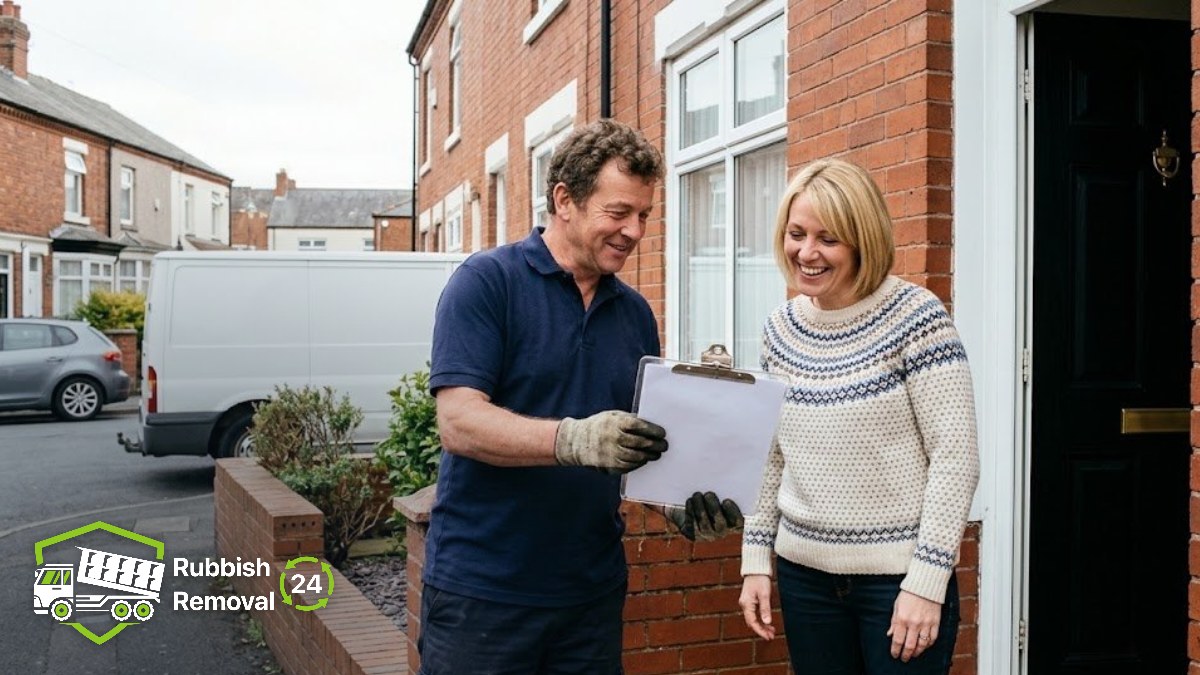
1. Book a survey or send photos
The company assesses how much there is, any access issues and any special items such as fridges, mattresses or garden waste.
2. Get a fixed, written quote
The quote should include labour, transport and disposal. Ask whether any items carry extra charges.
3. Remove what you want to keep
Take personal documents, photos, jewellery and sentimental items out first. Mark anything else that must stay with clear labels.
4. Clearance day
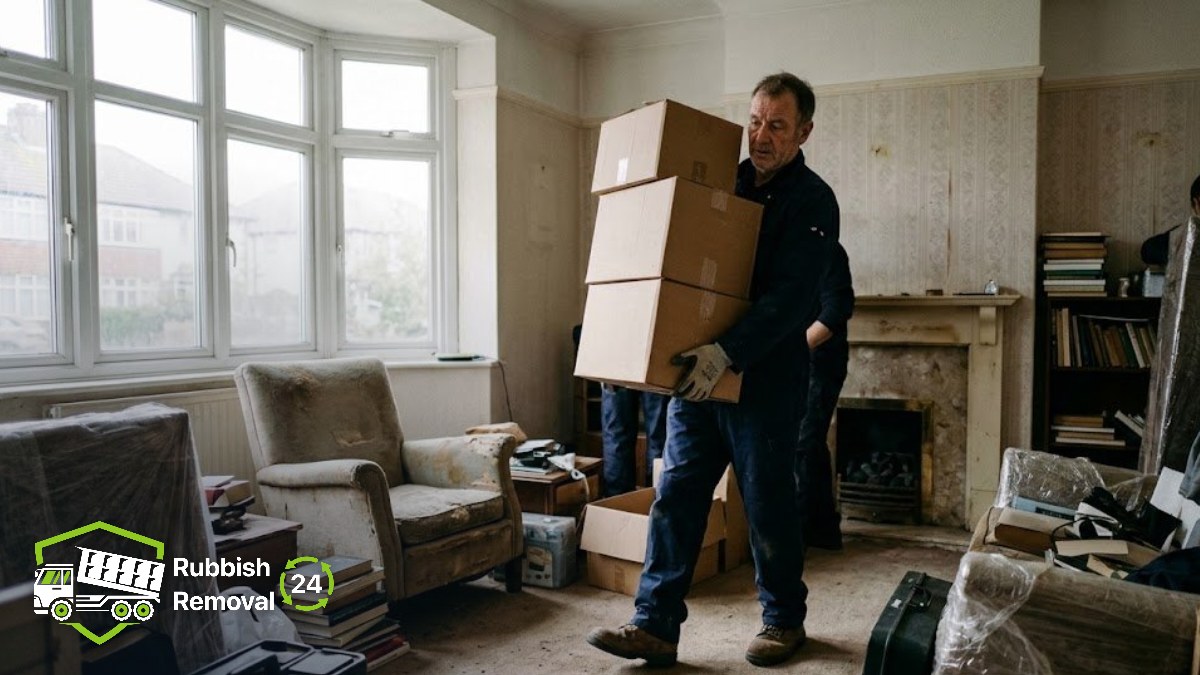
The team works room by room, protects floors and doorways, and loads the van. A typical 3-bed house can often be cleared in a day, depending on volume and access.
5. Sorting and disposal
Items are separated for reuse, recycling and disposal. Upholstered seating goes for incineration under POPs rules, and fridges go to specialist recyclers.
6. Final sweep and handover
The property is swept and left ready for cleaning, sale, letting or handover to a landlord.
How much does a house clearance cost in 2026?
| Property or job | Typical UK cost |
|---|---|
| Single room | £120–£300 |
| 1-bed flat | £250–£500 |
| 2-bed house | £350–£800 |
| 3-bed house | £500–£1,200 |
| 4-bed+ house | £900–£2,000 |
| Probate clearance | £400–£1,500 |
| Hoarder or deep clearance | £1,000–£3,500 |
Indicative ranges from published 2026 UK house clearance cost guides. London and the South East tend to cost more.
What affects the price?
- Volume: the more there is, the higher the cost
- Access: upper floors, no lift and parking restrictions add time
- Special items: fridges, mattresses, paint and gas bottles cost more to dispose of
- Condition: hoarded or damp properties take longer
- Resale value: good-quality items can reduce your bill
Do house clearance companies pay you?
Usually not, but they can reduce your bill. If a property contains valuable antiques, quality furniture or collectables, some companies will offset their value against the clearance cost. It is rare for a clearance firm to pay you outright, as labour, transport and disposal costs normally outweigh resale value. If you think items are valuable, get them valued separately before the clearance.
Do house clearance companies take everything?
Most will take almost everything, including furniture, appliances, clothes, books, kitchenware, garden items and general rubbish. Exceptions usually include:
- Asbestos, which needs a specialist contractor
- Clinical waste
- Chemicals and some hazardous materials
- Very large amounts of soil or rubble, which may be quoted separately
Tell the company about these items before they quote.
Does the council do house clearances?
No. Councils offer bulky waste collections for a limited number of large items, but they do not clear whole properties. For a full clearance, you will need a private company.
Which charities do house clearances?
Some charities, including the British Heart Foundation and local furniture reuse projects, collect donated furniture and electricals for free. They only take items they can resell, which means upholstered furniture must have its fire safety label. They will not clear rubbish or damaged items, so charity collections work best alongside a professional clearance.
Probate and bereavement clearances
Clearing a loved one’s home is emotional. A sensitive clearance team will:
- Work around probate timelines and estate agent deadlines
- Set aside paperwork, photos and personal items for the family
- Liaise with executors, solicitors or landlords if needed
- Donate usable items so they go to a good home
End-of-tenancy clearances for landlords
Tenants sometimes leave furniture and rubbish behind. A fast clearance helps you re-let quickly and avoid void periods. Check your tenancy agreement for the correct process before removing a tenant’s belongings.
How to choose a house clearance company
- Check the waste carrier licence on the Environment Agency’s public register.
- Ask for a fixed written quote with no hidden extras.
- Ask where items go and how much is recycled or donated.
- Ask for a waste transfer note after the job.
- Check reviews and ask whether they are insured.
Book a house clearance with Rubbish Removal 24
Our licensed team clears houses, flats, lofts, garages and gardens with care. We give a clear, fixed quote, donate and recycle wherever we can, and leave the property swept and empty. Get your free house clearance quote.
Want to know what a collection costs? See our UK rubbish removal price guide for 2026 prices by load size.
Frequently asked questions
What does a house clearance involve?
A house clearance involves sorting, removing and responsibly disposing of all unwanted contents from a property, including lofts, garages and gardens, then leaving it swept and clear.
How does house clearance work in the UK?
You get a survey or photo quote, remove anything you want to keep, and the licensed team clears, sorts, recycles and disposes of the rest, usually in a day for a typical home.
Do house clearance companies pay you?
Rarely. Valuable items can reduce the cost, but labour and disposal usually outweigh resale value.
How long does it take to clear a house?
Most 2–3 bedroom homes take one day. Larger, hoarded or hard-to-access properties can take longer.
Do I need to be there for a house clearance?
Not always. Many companies can work with key access once you have agreed what stays and what goes.
How much does a house clearance cost?
In 2026, typical UK prices range from £250–£500 for a 1-bed flat to £500–£1,200 for a 3-bed house.
Written by the Rubbish Removal 24 team, licensed waste carriers with six years’ experience in house, loft and garage clearances. Updated October 2026.